

News
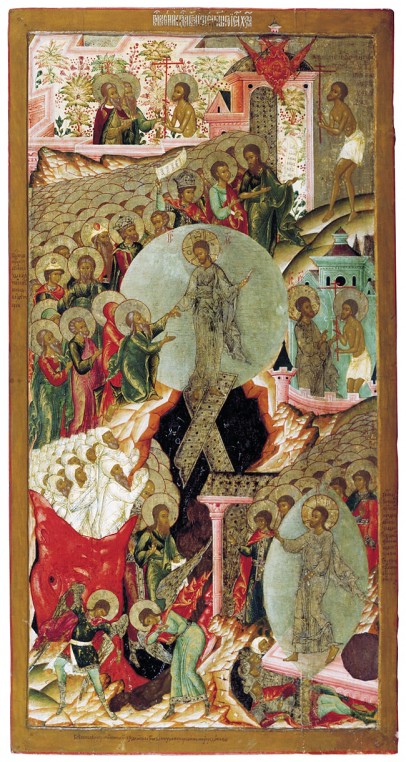
Christ is Risen!
20/04/2014
Christ is Risen!
Truly, He is risen!
Today the Orthodox Church celebrates the most important holiday for Christians - Easter. The week before Easter is called Passion Week. This is when special services are conducted in almost every church in Georgia, but most particular days are Passion Thursday and Good Friday.
The Paschal greeting is a custom among Orthodox Christians, consisting of a greeting and response. Instead of "hello" or its equivalent, one is to greet another person with "Christ is Risen!" The response is "Truly, He is risen!" (or "Indeed, He is risen!"). This greeting is used during liturgical services and informally at other times, starting with the feast of Pascha and lasting until Ascension, the period known as Paschaltide.
In practice, this custom is usually restricted in use with people that one already knows are Orthodox. In some cultures (e.g., in Russia), it was also customary to exchange a triple kiss after the greeting. It is not uncommon for Orthodox Christians to compile lists of the greeting as it is used around the world, as an act of Orthodox unity across languages and cultures.
In 325CE the Council of Nicaea established that Easter would be held on the first Sunday after the first full moon occurring on or after the March equinox. From that point forward, the Easter date depended on the ecclesiastical approximation of March 21 for the March equinox. Easter is delayed one week if the full moon is on Sunday, which decreases the chances of it falling on the same day as the Jewish Passover.
Although the Council of Nicaea established the Easter date for churches around the world, not all Christian churches observe Easter according the Gregorian calendar. Many Orthodox churches still observe Easter in accordance with the Julian calendar.
Easter celebrations in Orthodox Christian communities usually include a display of hard-boiled eggs, dyed red to symbolize the blood of Christ. The egg was an important symbol in the mythologies of many early civilizations and was also connected with the springtime fertility rituals. Many Greeks rap their eggs against their friends' eggs and the owner of the last uncracked egg is considered lucky. The red eggs are usually prepared on Holy Thursday in countries such as Greece. According to tradition, the Virgin Mary dyed eggs red to celebrate the Resurrection of Christ and to celebrate life. A traditional Easter dinner may consist of red-dyed eggs baked into a braided loaf of bread, spit-roasted, herb-perfumed baby lamb, and assorted vegetables.
One of the most common Christian symbols associated with Easter is the lamb. It is often depicted with a banner that bears a cross, and it is known as the Agnus Dei, meaning "Lamb of God" in Latin. The symbol’s origin relates to the Jewish Passover. In ancient times the Jews sacrificed a lamb in the course of the festival. The early Christians associated the sacrifice of the lamb with Jesus Christ's sacrifice on the cross. They connected the joyous Passover festival, which celebrates the liberation of Jewish people from years of bondage in Egypt, with the liberation from death represented by the resurrection of Jesus Christ.
Other News
-
29/09/2016
SKYE Clubs
-
01/06/2016
MEDIATION – CONFLICT RESOLUTION (INCLUDING RELIGIOUS) THROUGH NEGOTIATION May - 2016
-
01/06/2016
“INTELLECTUAL AND SPIRITUAL DEVELOPMENT OF YOUTH” May – 2016
-
30/04/2016
Mediation – conflict resolution (including religious) through negotiation
-
30/04/2016
“Intellectual and spiritual development of Youth”
-
07/04/2016
The litugry of Annunciation
-
07/04/2016
Let’s beg the Lord that the day of Annuciation would be happy and peaceful.