

News
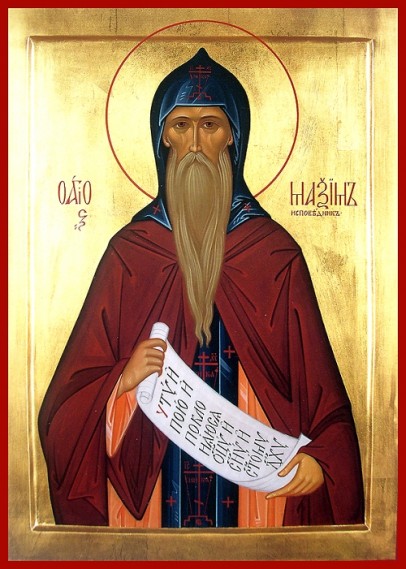
St. Maximus The Confessor
03/02/2014
On January 21 (February 3) the Orthodox Church commemorates St. Maximus the Confessor.
Our venerable and God-bearing Father Maximus the Confessor (ca. 580-662) was an Orthodox Christian monk and ascetical writer known especially for his courageous fight against the heresy of Monothelitism. His feast days in the Church are celebrated on January 21 and, for the translation of his relics, on August 13.
He was born in the region of Constantinople, was well educated, and spent some time in government service before becoming a monk, having been a member of the old Byzantine aristocracy and holding the post of Imperial Secretary under Emperor Heraclius. Around 614, he became a monk (later abbot) at the monastery of Chrysopolis. During the Persian invasion of the Empire (614), he fled to Africa.
From about 640 on, he became the determined opponent of Monothelitism, the heretical teaching that Jesus Christ had only one will. In this, he followed the example of St. Sophronius of Jerusalem, who was the first to combat this heresy starting in 634.
Maximus supported the Orthodoxy of Rome on this matter and is said to have exclaimed: "I have the faith of the Latins, but the language of the Greeks." He argued for Dyothelitism, the Orthodox teaching that Jesus Christ possessed two wills (one divine and one human), rather than the one will posited by Monothelitism.
After Pyrrhus, the temporarily deposed Monothelite Patriarch of Constantinople, had declared his defeat in a dispute at Carthage (645), Maximus obtained the heresy's condemnation at several local synods in Africa, and also worked to have it condemned at the Lateran Council of 649. He was brought to Constantinople in 653, pressured to adhere to the Typos of Emperor Constans II. Refusing to do so, he was exiled to Thrace. (Pope St. Martin of Rome was tried around the same time in Constantinople, and thus deposed and exiled to Crimea.)
In 661 Maximus again was brought to the imperial capital and questioned; while there, he had his tongue uprooted and his right hand cut off (to prevent him from preaching or writing the true faith), and then was again exiled to the Caucasus, but died shortly thereafter.
Ultimately, Maximus was exonerated by the Sixth Ecumenical Council and recognized as a Father of the Church.
He left many writings (some of which are collected in the Philokalia) that are still widely read today; some are doctrinal, but many more describe the contemplative life and offer spiritual advice. He also wrote widely on liturgical and exegetical subjects. His theological work was later continued by St. Simeon the New Theologian and by St. Gregory Palamas.
Other News
-
29/09/2016
SKYE Clubs
-
01/06/2016
“INTELLECTUAL AND SPIRITUAL DEVELOPMENT OF YOUTH” May – 2016
-
01/06/2016
MEDIATION – CONFLICT RESOLUTION (INCLUDING RELIGIOUS) THROUGH NEGOTIATION May - 2016
-
30/04/2016
Mediation – conflict resolution (including religious) through negotiation
-
30/04/2016
“Intellectual and spiritual development of Youth”
-
07/04/2016
The litugry of Annunciation
-
07/04/2016
Let’s beg the Lord that the day of Annuciation would be happy and peaceful.